

Quick Checklist Before Learning Korean Last Names ✅
Know the most common names – Some surnames like Kim, Lee, and Park dominate Korean culture.
Learn the Hanja meaning – Many surnames have Chinese character origins.
Recognize clan significance – Some last names are tied to historical clans.
Understand pronunciation – Romanization may vary (Lee vs. Yi).
Use for cultural respect – Correct use is important in formal contexts.
🌏 Korean Last Names and Meanings
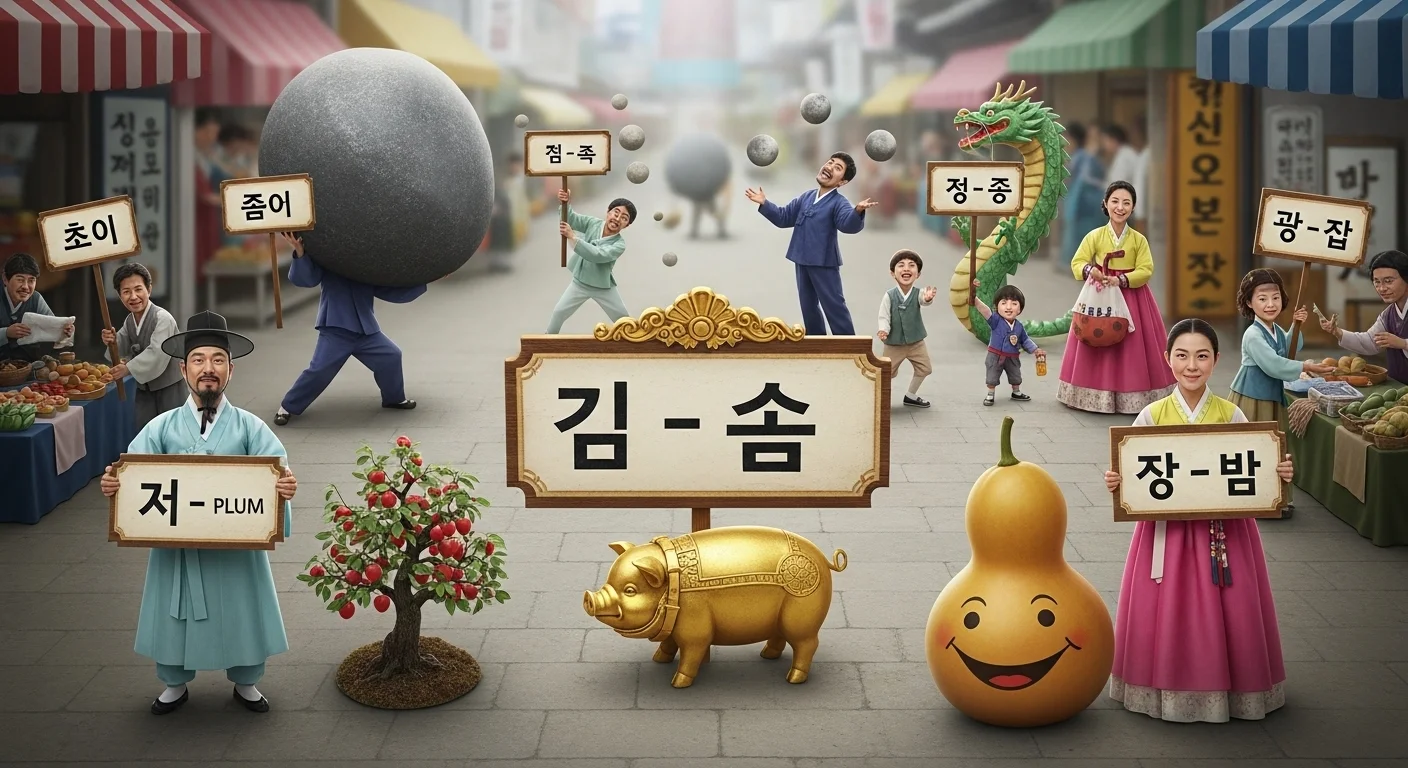
- Kim (김) – “Gold”
- Lee / Yi (이) – “Plum tree”
- Park (박) – “Gourd”
- Choi (최) – “Peak” or “pinnacle”
- Jung / Jeong (정) – “Virtuous” or “upright”
- Kang (강) – “River” or “strong”
- Cho (조) – “Ancestor”
- Yoon (윤) – “Allow” or “govern”
- Jang (장) – “Long” or “leader”
- Lim / Im (임) – “Forest”
- Han (한) – “Great” or “Korea”
- Shin (신) – “Trust” or “belief”
- Seo (서) – “West”
- Kwon (권) – “Authority”
- Hwang (황) – “Yellow” or “imperial”
- Ahn (안) – “Peace”
- Song (송) – “Pine tree”
- Ryu / Yoo (류/유) – “Willow”
- Bae (배) – “Pear”
- Nam (남) – “South”
👩 Korean Last Names Female
- Kim
- Lee
- Park
- Choi
- Jung
- Kang
- Seo
- Yoon
- Han
- Lim
- Shin
- Hwang
- Kwon
- Ahn
- Song
- Bae
- Jang
- Ryu
- Oh
- Moon
🌟 Unique Korean Last Names
- Hae (해) – “Sea”
- Wi (위) – “Top” or “above”
- Pyo (표) – “Sign” or “mark”
- Ma (마) – “Horse”
- Jeon (전) – “Field”
- No (노) – “Old” or “ancient”
- Seok (석) – “Stone”
- Byeon (변) – “Change”
- Ok (옥) – “Jade”
- Ban (반) – “Half”
- Go (고) – “High”
- So (소) – “Small”
- Eom (엄) – “Strict”
- Gwak (곽) – “Outer wall”
- Hyeon (현) – “Wise”
- Jin (진) – “Truth”
- Seon (선) – “Goodness”
- Myung (명) – “Bright”
- Joo (주) – “State”
- Tae (태) – “Great”
👨 Korean Last Names Male
- Kim
- Lee
- Park
- Choi
- Kang
- Jung
- Cho
- Yoon
- Jang
- Lim
- Han
- Shin
- Seo
- Kwon
- Hwang
- Ahn
- Song
- Bae
- Ryu
- Nam
👑 Royal Korean Surnames
- Lee (Yi) – Royal house of Joseon Dynasty
- Kim (Gimhae Kim) – Noble lineage
- Park (Bak) – Ancient royal roots of Silla
- Wang – Royal surname of Goryeo Dynasty
- Jeonju Lee – Imperial Joseon lineage
- Miryang Park – Aristocratic clan
- Gyeongju Kim – Silla royal family
- Andong Kim – Powerful noble clan
- Pungyang Jo – Influential royal court family
- Yeoheung Min – Queen Min’s lineage
- Haeju Choi – Noble heritage
- Jeonju Ryu – Elite aristocracy
- Yeonan Lee – Historic noble clan
- Goryeong Shin – Prestigious lineage
- Cheongju Han – Royal court ties
🌑 Korean Last Names with Dark Meanings
- Heuk (흑) – “Black”
- Am (암) – “Darkness”
- Yeom (염) – “Flame” or “burn”
- Jang (장) – “Barrier” or “wall”
- Gwi (귀) – “Ghost” or “spirit”
- Dok (독) – “Poison”
- Sal (살) – “Kill” or “fate”
- Geum (금) – “Metal” (cold/rigid symbolism)
- Baek (백) – “White” (associated with mourning)
- Myul (멸) – “Destruction”
- Chul (철) – “Iron”
- Seop (섭) – “Control”
- Hwan (환) – “Illusion”
- Ryeok (력) – “Power/force”
- Gyeok (격) – “Strike”
💖 Beautiful Korean Last Names
- Kim – Elegant and timeless
- Lee – Classic and graceful
- Park – Soft yet strong
- Choi – Refined and noble
- Yoon – Smooth and modern
- Seo – Minimal and chic
- Han – Strong and meaningful
- Lim – Nature-inspired
- Shin – Pure and sincere
- Song – Calm and poetic
- Bae – Gentle and sweet
- Ryu – Flowing like water
- Moon – Dreamy and soft
- Oh – Simple and stylish
- Jung – Balanced and graceful
- Ahn – Peaceful and calm
- Hwang – Regal and bold
- Kwon – Powerful yet elegant
- Joo – Bright and modern
- Tae – Strong and bold
🇺🇸 American Korean Last Names
- Kim
- Lee
- Park
- Choi
- Jung
- Kang
- Cho
- Yoon
- Jang
- Lim
- Han
- Shin
- Seo
- Kwon
- Hwang
- Ahn
- Song
- Bae
- Ryu
- Moon
Most Common Korean Last Names 🇰🇷
Kim (김) – One of the most widespread surnames, meaning “gold.”
Lee / Yi (이 / 리) – Means “plum tree” and has several romanization variations.
Park / Pak (박) – Literally “gourd,” common across Korea.
Choi (최) – Pronounced “Chweh,” historically tied to royal lineage.
Jung / Jeong (정) – Meaning “upright” or “proper.”
Kang (강) – Meaning “river.”
Cho / Jo (조) – Meaning “ancestor” or “beginning.”
Yoon / Yun (윤) – Meaning “allow” or “govern.”
Lim / Im (임 / 림) – Meaning “forest.”
Han (한) – Historically linked to nobility, meaning “country” or “big.”
Do you recognize any of these familiar Korean surnames?
Less Common Korean Last Names ✨
Seo (서) – Meaning “west” or “auspicious.”
Oh / O (오) – Meaning “five” or “defend.”
Shin / Sin (신) – Meaning “faith” or “belief.”
Hwang (황) – Meaning “yellow” or “emperor.”
Kwon (권) – Meaning “authority” or “power.”
Jang / Chang (장) – Meaning “long” or “leader.”
Im / Lim (임 / 림) – Sometimes used interchangeably with the forest meaning.
Yoo / Ryu (유 / 류) – Meaning “flow” or “abundant.”
Jeon / Chun (전 / 천) – Meaning “field” or “whole.”
Baek / Paik (백) – Meaning “white” or “pure.”
Which of these less common surnames do you find intriguing?
Rare and Unique Korean Last Names 🌟
Seok (석) – Meaning “stone.”
Moon / Mun (문) – Meaning “door” or “writing.”
Nam (남) – Meaning “south.”
Son (손) – Meaning “hand” or “descendant.”
Hyeon / Hyun (현) – Meaning “worthy” or “virtuous.”
Bae (배) – Meaning “pear” or “boat.”
Gil / Kil (길) – Meaning “road” or “path.”
Jeong / Chung (정 / 충) – Variation with regional differences.
Hong (홍) – Meaning “red” or “flood.”
Ahn / An (안) – Meaning “peace” or “safe.”
Rare surnames often have interesting historical stories attached.
Famous People With Korean Last Names 🌟
Kim Yuna – Olympic figure skater.
Lee Min-ho – Popular actor.
Park Ji-sung – Legendary footballer.
Choi Si-won – K-pop star.
Yoon Suk-yeol – President of South Korea.
Han Ga-in – Actress known for dramas.
Shin Dong-hyuk – Human rights activist.
Many of these last names carry rich histories and cultural significance.
How Korean Last Names Work 📝
Family clans (Bon-gwan) – A surname may be shared, but the clan indicates origin.
Fewer surnames than given names – Most Korean last names are shared by millions.
Gender-neutral usage – Last names do not change based on gender.
Romanization variations – Kim vs. Gim, Lee vs. Yi, Park vs. Pak.
Respect and tradition – Last names are important in formal and social contexts.
Tips for Using Korean Last Names Properly 🌸
Learn the proper pronunciation in Korean.
Check Hanja meanings if you want cultural accuracy.
Use full names when addressing formally.
Avoid assuming family relations just from last names.
Explore historical context to understand significance.