
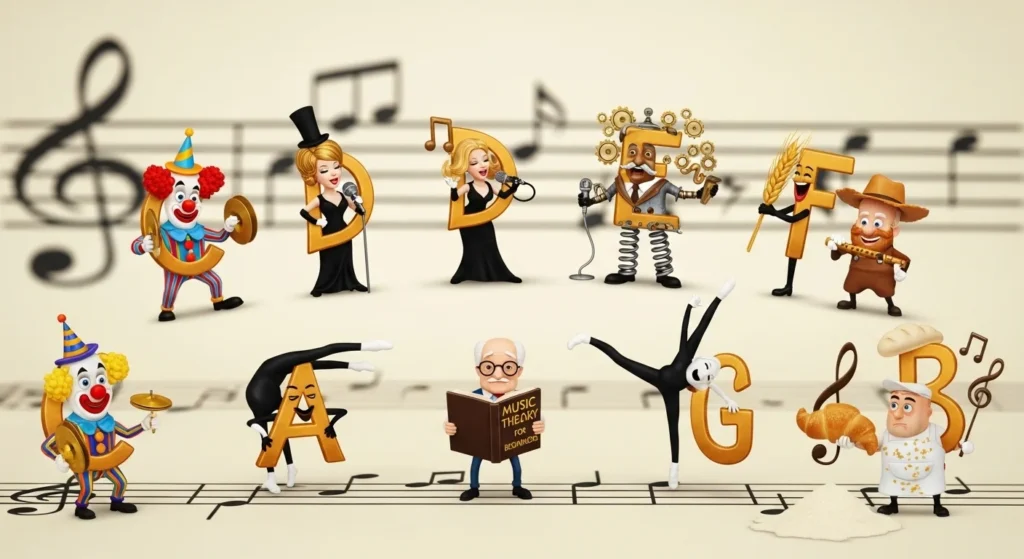
✅ Quick Checklist Before Choosing Music Notes Names
Before diving into our massive list, keep these quick tips in mind:
- 🎵 Know your scale: Are you using C major, chromatic, or another scale?
- 📝 Keep it simple: Easy-to-remember names help with learning and composition.
- 🎹 Consider sharps and flats: Some notes have multiple names (e.g., C♯/D♭).
- 🎤 Match your style: Classical, jazz, or pop may inspire different naming conventions.
- 🎼 Visual cues help: Color-coded notes or symbols make memorization easier.
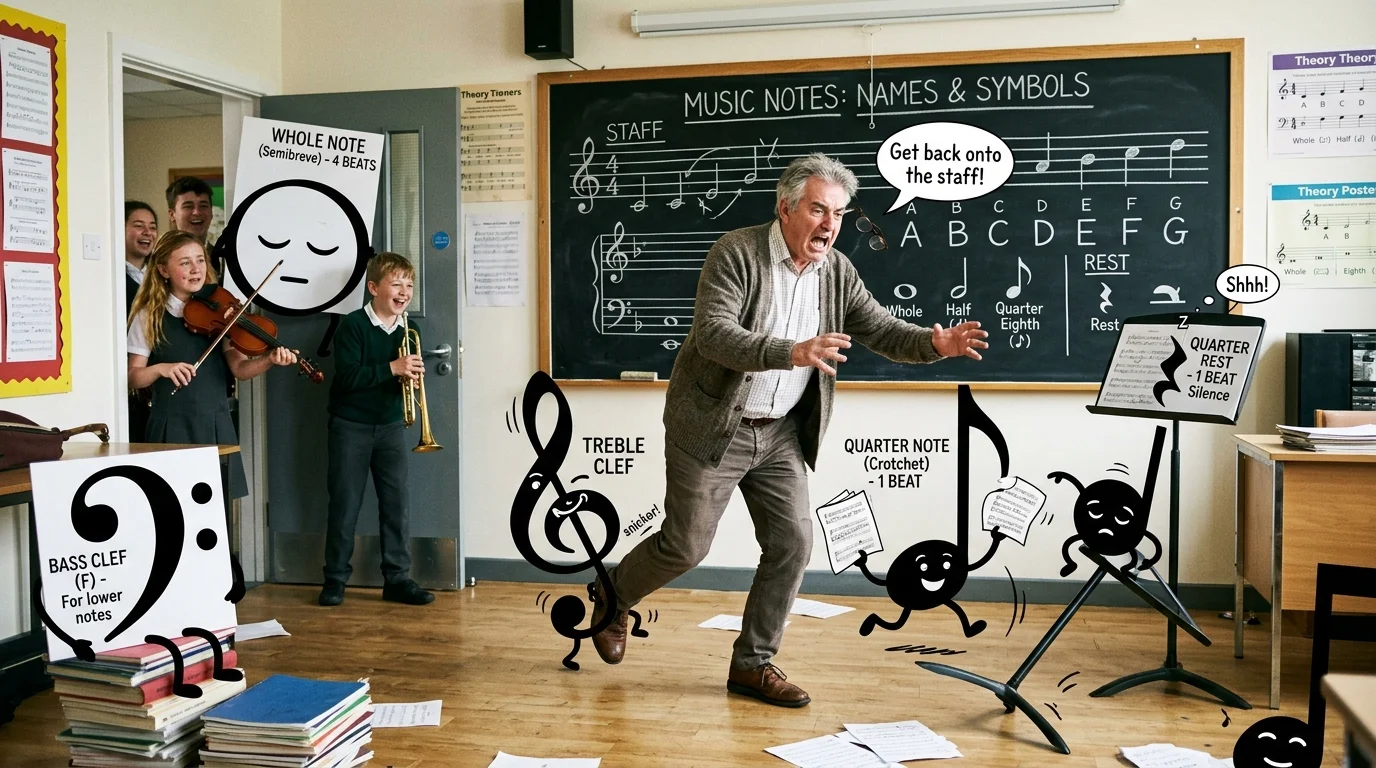
🎵 Music Notes Names and Symbols
- Whole Note (𝅝) — Held for the full duration of a measure
- Half Note (𝅗𝅥) — Held for half the duration of a whole note
- Quarter Note (𝅘𝅥𝅮) — One beat in common time
- Eighth Note (𝅘𝅥𝅯) — Half a beat
- Sixteenth Note (𝅘𝅥𝅰) — Quarter of a beat
- Rest Symbols — Silence equivalent to each note value
- Sharp (♯) — Raises a note by a half step
- Flat (♭) — Lowers a note by a half step
- Natural (♮) — Cancels sharp or flat
- Treble Clef (𝄞) — High pitch staff marker
- Bass Clef (𝄢) — Low pitch staff marker
🎼 Music Notes ABCDEFG
- A — La (in solfege)
- B — Ti
- C — Do
- D — Re
- E — Mi
- F — Fa
- G — Sol
These 7 notes repeat across all octaves in music theory.
🎶 Music Notes Names and Meanings
- C (Do) — Root / home note in many scales
- D (Re) — Movement and transition
- E (Mi) — Bright and melodic tone
- F (Fa) — Stability and resolution building
- G (Sol) — Strong and uplifting sound
- A (La) — Soft and expressive tone
- B (Ti) — Leading tone that resolves to C
- Sharp (♯) — Raises pitch, adds tension
- Flat (♭) — Lowers pitch, softens sound
- Natural (♮) — Returns note to original pitch
🥁 Music Notes Names and Beats
- Whole Note — 4 beats
- Half Note — 2 beats
- Quarter Note — 1 beat
- Eighth Note — 1/2 beat
- Sixteenth Note — 1/4 beat
- Dotted Note — Adds half of its value
- Rest Notes — Silence matching beat values
- Time Signature (4/4) — 4 beats per measure
- Time Signature (3/4) — 3 beats per measure
- Time Signature (6/8) — 6 eighth-note beats
🎼 Musical Notes Symbols
- 𝅝 — Whole note
- 𝅗𝅥 — Half note
- 𝅘𝅥𝅮 — Quarter note
- 𝅘𝅥𝅯 — Eighth note
- ♩ — Quarter note (simple form)
- ♪ — Eighth note
- ♫ — Beamed notes
- ♯ — Sharp
- ♭ — Flat
- ♮ — Natural
- 𝄞 — Treble clef
- 𝄢 — Bass clef
🎵 What Are the 7 Musical Notes
- C — Do
- D — Re
- E — Mi
- F — Fa
- G — Sol
- A — La
- B — Ti
These 7 notes form the foundation of Western music scales and melodies.
🎼 Music Notes Names on Staff
Treble Clef (High Notes)
- E — Bottom line
- G — Second line
- B — Middle line
- D — Fourth line
- F — Top line
Spaces:
- F
- A
- C
- E
Bass Clef (Low Notes)
- G — Bottom line
- B — Second line
- D — Middle line
- F — Fourth line
- A — Top line
Spaces:
- A
- C
- E
- G
📊 Music Notes Chart (Simple Reference)
| Note | Solfege | Beat Value |
|---|---|---|
| Whole Note | Do | 4 beats |
| Half Note | Re | 2 beats |
| Quarter Note | Mi | 1 beat |
| Eighth Note | Fa | 1/2 beat |
| Sixteenth Note | Sol | 1/4 beat |
🎶 Classic Music Notes Names
- C
- D
- E
- F
- G
- A
- B
- C♯
- D♯
- F♯
- G♯
- A♯
- D♭
- E♭
- G♭
- A♭
- B♭
- High C
- Low C
- Middle C
Which of these notes do you play most often on your instrument? 🎹
🎼 Fun & Creative Music Notes Names
- Twinkle C
- Jazzy D
- Energetic E
- Funky F
- Groovy G
- Awesome A
- Bold B
- Sharp C♯
- Dynamic D♯
- Fabulous F♯
- Glittery G♯
- Angelic A♯
- Dreamy D♭
- Elegant E♭
- Graceful G♭
- Magical A♭
- Bright B♭
- Mystic Middle C
- Lunar Low C
- Radiant High C
Which fun name would you assign to your next melody? 🌟
🎹 Easy-to-Remember Music Notes Names for Beginners
- Do
- Re
- Mi
- Fa
- Sol
- La
- Ti
- Do♯
- Re♯
- Fa♯
- Sol♯
- La♯
- Re♭
- Mi♭
- Sol♭
- La♭
- Ti♭
- Low Do
- Middle Do
- High Do
Do you prefer the traditional “Do-Re-Mi” system or letter notes? 🎵
🎶 Advanced/Extended Music Notes Names
- C double sharp (C×)
- D double sharp (D×)
- E double sharp (E×)
- F double sharp (F×)
- G double sharp (G×)
- A double sharp (A×)
- B double sharp (B×)
- C double flat (C♭♭)
- D double flat (D♭♭)
- E double flat (E♭♭)
- F double flat (F♭♭)
- G double flat (G♭♭)
- A double flat (A♭♭)
- B double flat (B♭♭)
- Enharmonic C♯/D♭
- Enharmonic D♯/E♭
- Enharmonic F♯/G♭
- Enharmonic G♯/A♭
- Enharmonic A♯/B♭
- Enharmonic C♯ high
Which of these advanced notes do you find trickiest to read? 🎼
🎸 Music Notes Names for Guitarists
- C string
- D string
- E string
- F string
- G string
- A string
- B string
- C5
- D5
- E5
- F5
- G5
- A5
- B5
- Open C
- Open D
- Open E
- Barre F
- Barre G
- Barre A
Guitarists, which string do you love to play most? 🎸
🎹 Music Notes Names for Pianists
- Middle C
- D next to C
- E next to D
- F next to E
- G next to F
- A next to G
- B next to A
- High C
- Low C
- C♯ key
- D♯ key
- F♯ key
- G♯ key
- A♯ key
- E♭ key
- B♭ key
- F♭ key
- G♭ key
- A♭ key
- C octave keys
Which piano note do you practice daily? 🎹
🌟 Seasonal & Fun-Themed Music Notes Names
- Winter C
- Snowy D
- Frosty E
- Ice F
- Sleigh G
- Holiday A
- Cheerful B
- Spring C♯
- Blooming D♯
- Sunny E♯
- Rainy F♯
- Breezy G♯
- Summer A♯
- Beachy D♭
- Autumn E♭
- Leafy G♭
- Cozy A♭
- Spooky B♭
- Midnight C
- Sunset C
Which seasonal note fits your musical vibe? 🍂
📝 How We Create Music Notes Names
- Understand the scale: Major, minor, chromatic, or pentatonic.
- Assign personality: Fun, classic, seasonal, or genre-specific.
- Consider sharps/flats: Include alternative enharmonic names for clarity.
- Make it memorable: Use catchy adjectives or alliteration.
- Test it in context: See how it sounds in songs or melodies.
💡 Tips for Making Your Music Stand Out
- Use color-coded notes for quick recognition. 🎨
- Pair notes with instruments for easier recall. 🎻
- Create mnemonic phrases (e.g., Every Good Boy Deserves Fun for treble notes). 🎶
- Experiment with unique note names to inspire creativity. 🌟
- Keep practicing consistently; muscle memory helps retention. 💪