
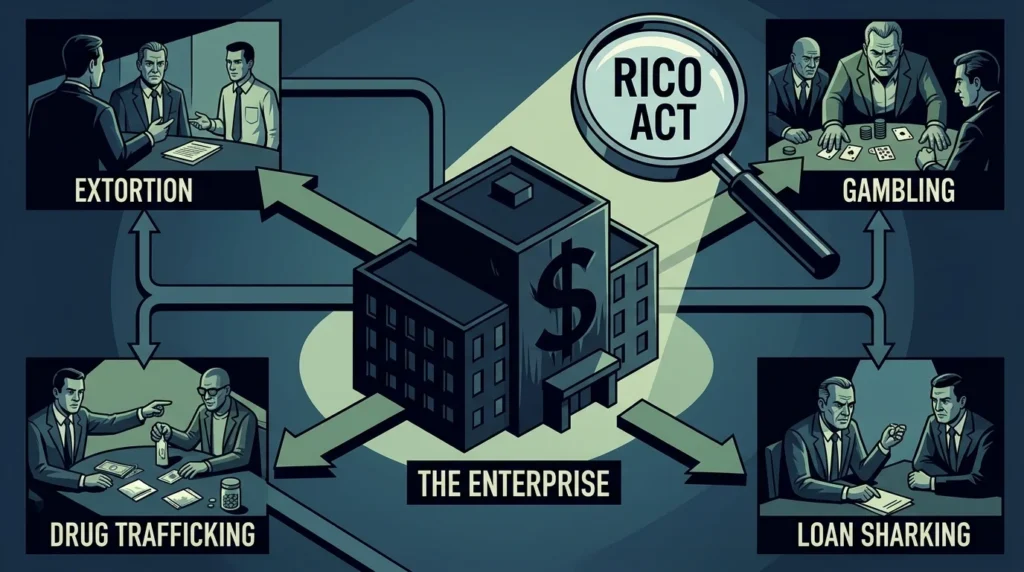
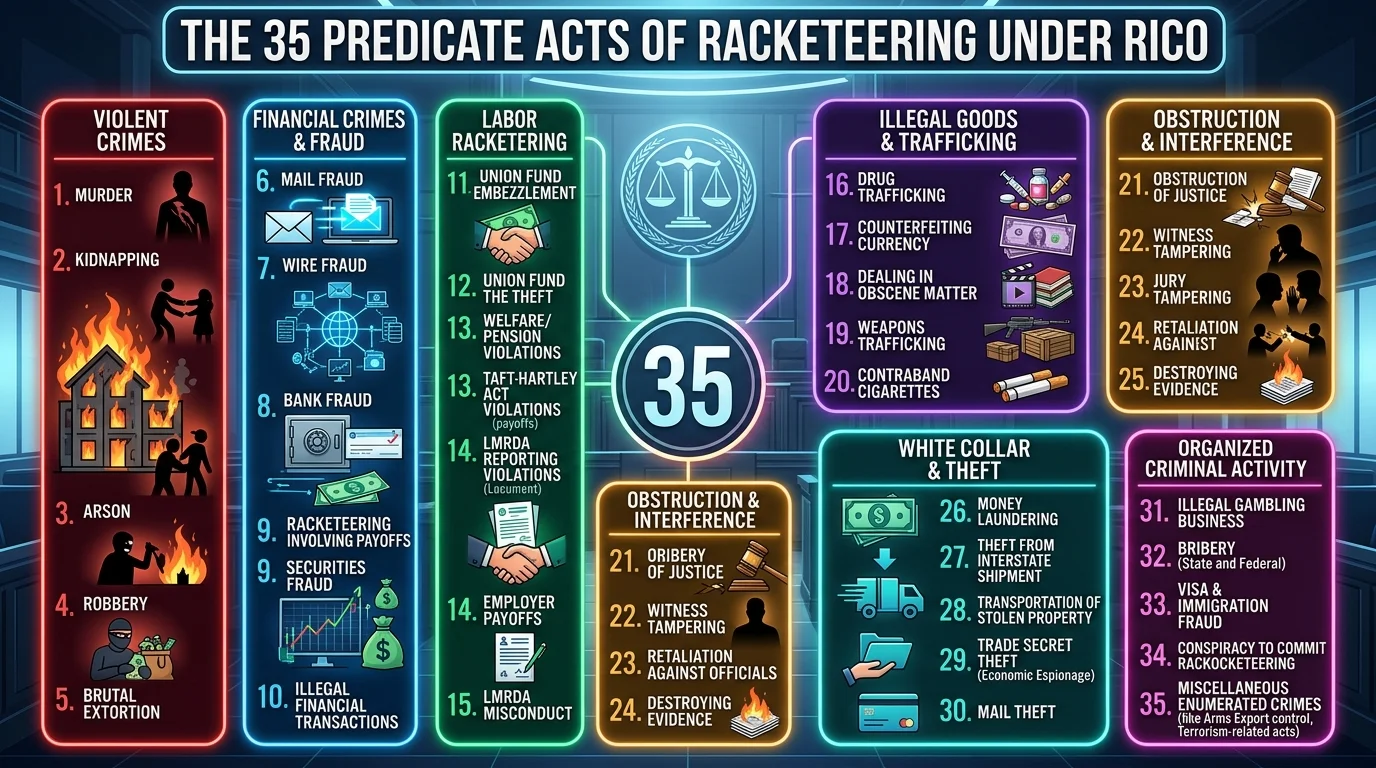
What Are the 35 Crimes of Racketeering?
Under U.S. law (RICO Act), racketeering includes a list of specific criminal activities called “predicate offenses.” These are the crimes that can make up a racketeering case.
Commonly Recognized Racketeering Crimes Include:
- Murder
- Kidnapping
- Gambling (illegal operations)
- Arson
- Robbery
- Bribery
- Extortion
- Dealing in obscene material
- Dealing in controlled substances (drugs)
- Prostitution-related crimes
- Fraud (mail fraud)
- Fraud (wire fraud)
- Counterfeiting
- Embezzlement
- Obstruction of justice
- Witness tampering
- Money laundering
- Credit card fraud
- Bankruptcy fraud
- Securities fraud
- Tax evasion
- Identity theft
- Human trafficking
- Immigration-related fraud
- Smuggling
- Theft from interstate shipments
- Forgery
- Trafficking stolen goods
- Environmental crimes
- Terrorism-related acts
- Cybercrime / computer fraud
- Insider trading
- Loan sharking (illegal lending)
- Insurance fraud
- Election fraud
Important:
- A racketeering charge usually requires at least two of these crimes within a period of time.
- The crimes must be connected and part of a pattern.
Why Is It Called Racketeering?
The term comes from the word “racket,” which means a dishonest or illegal scheme designed to make money.
Historically:
- Criminal groups ran “rackets” like protection scams
- Businesses were forced to pay money to avoid harm
So, racketeering = running illegal schemes (rackets) as a system
What Are the 3 Types of Racketeering?
While racketeering can take many forms, it’s often grouped into three main types:
1. Organized Crime Racketeering
- Mafia-style operations
- Drug trafficking, gambling, extortion
2. Corporate or White-Collar Racketeering
- Fraud, insider trading, bribery
- Often involves businesses or executives
3. Cyber & Modern Racketeering
- Online scams
- Identity theft
- Digital fraud networks
Racketeering Sentence (Examples)
Here are simple ways the word is used in sentences:
- “The company was investigated for racketeering and fraud.”
- “He was charged with racketeering after running an illegal gambling ring.”
- “Authorities uncovered a large racketeering network operating online.”
Racketeering in Spanish
The word racketeering in Spanish is commonly translated as:
- “crimen organizado” (organized crime)
- or “extorsión organizada” (organized extortion, depending on context)
In legal contexts, it may also be described as:
- “delitos de asociación ilícita”
Racketeering Synonym
Some common synonyms or related terms include:
- Organized crime
- Criminal enterprise
- Illegal operation
- Fraud scheme
- Extortion network
Note: No single word fully replaces “racketeering,” but these come close depending on context.
Does Racketeering Still Happen?
Yes—racketeering absolutely still exists today.
It has evolved with technology and globalization. Modern racketeering includes:
- Online scams and phishing networks
- Cryptocurrency fraud
- International trafficking rings
- Corrupt corporate practices
While old-school mafia-style rackets still exist, many have shifted to digital and financial systems.
Racketeering vs Money Laundering
These two terms are often confused, but they are different.
Racketeering:
- A broad category of organized crimes
- Involves multiple illegal activities
- Focuses on running a criminal enterprise
Money Laundering:
- A specific crime
- Involves hiding illegal money to make it look legal
Simple Comparison:
| Feature | Racketeering | Money Laundering |
|---|---|---|
| Scope | Wide (many crimes) | Narrow (one activity) |
| Purpose | Run illegal operations | Hide illegal profits |
| Example | Fraud network | Cleaning dirty money |
Key Insight:
Money laundering is often part of racketeering, but racketeering includes much more.
Common Mistakes & Misunderstandings
1. Thinking It’s Just Mafia Crime
Racketeering can involve businesses, politicians, and online groups too.
2. Confusing It With a Single Crime
It’s about patterns of crime, not one act.
3. Ignoring Non-Violent Crimes
Many racketeering cases involve fraud, not violence.
What Does “Racketeering” Mean?
Racketeering is a legal term that refers to running or participating in an ongoing illegal business or scheme to make money.
Simple Definition:
- Racketeering = organized, repeated illegal activity for profit
This isn’t just a one-time crime. It usually involves:
- Multiple illegal actions
- A group or organization
- A pattern over time
Where Did the Term Come From?
The word “racketeering” comes from the idea of a “racket”, which means a dishonest or fraudulent scheme.
It became widely known in the U.S. during the 1920s–1930s when organized crime groups ran illegal businesses like:
- Gambling
- Extortion
- Bootlegging (illegal alcohol sales)
How Racketeering Works
Racketeering typically involves a system where criminals:
- Set up an illegal operation or control a business
- Use threats, fraud, or violence
- Keep the operation running over time to make profit
Common Activities in Racketeering:
- Extortion (forcing someone to pay money through threats)
- Money laundering (hiding illegal money)
- Fraud or scams
- Bribery
- Drug trafficking
- Human trafficking
Real-Life Examples of Racketeering
Example 1: Protection Racket
A group demands money from businesses in exchange for “protection.”
Meaning: If the business refuses, they may face threats or harm.
Example 2: Fraud Network
A group runs fake investment schemes and scams multiple people over time.
Meaning: This becomes racketeering because it’s organized and ongoing.
Example 3: Organized Crime Syndicate
A criminal organization runs illegal gambling, drugs, and money laundering operations.
Meaning: Multiple crimes + structure + time = racketeering.
Racketeering in Law
Racketeering is a serious criminal offense in many countries.
In the United States:
The law most associated with racketeering is the RICO Act (Racketeer Influenced and Corrupt Organizations Act).
It allows authorities to:
- Charge entire organizations, not just individuals
- Target leaders of criminal groups
- Seize illegal profits and assets
Key Features of Racketeering
To be considered racketeering, the activity usually includes:
- A pattern of illegal behavior
- An organization or enterprise
- Profit-driven motives
- Multiple related crimes over time
Common Misunderstandings
1. It’s Not Just One Crime
Racketeering involves ongoing criminal activity, not a single illegal act.
2. Not Only Mafia-Related
While often linked to organized crime, racketeering can also involve:
- Corporations
- Politicians
- Business networks
3. It’s Not Just Violence
Racketeering can include non-violent crimes like fraud or bribery.
Related Terms You Should Know
- Extortion – Forcing someone to pay money through threats
- Fraud – Deceiving people for financial gain
- Money Laundering – Hiding illegal money
- Organized Crime – Structured criminal groups
- Corruption – Abuse of power for personal gain
